Expanding the Geography of Operations: Ukraine May Target New Sites in the Baltic, Aviation Expert Says
Recent drone attacks on targets in the Kaliningrad region and the Gulf of Finland indicate a significant enhancement of Ukraine's long-range capabilities. Experts suggest the port of Primorsk could be the next target.
 🚌Transport
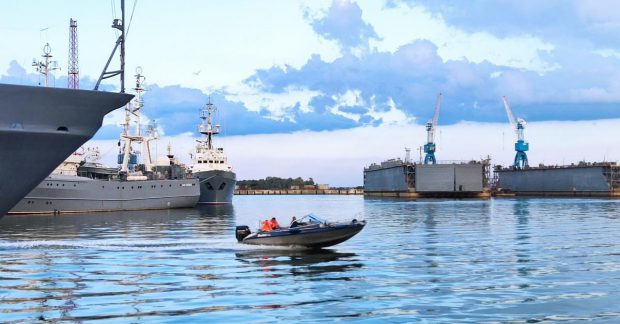
Photo: UNIAN
Key points
- Drone attacks in the Kaliningrad region and Gulf of Finland
- Reconnaissance nature of initial Baltic operations
- Potential future target is the port of Primorsk
Recent developments around the Kaliningrad region and the attack on a supply vessel in the Gulf of Finland demonstrate substantial progress in Ukraine's long-range capabilities. According to industry specialists, due to the blockade and neutralization of a significant portion of Russia's Black Sea Fleet, the operational focus is partially shifting to other maritime theaters, specifically the Baltic Sea.
Assessment of Actions in the Baltic Region
During the recent events in the Baltic, the Russian side attempted to actively counter threats using available air defense and electronic warfare systems. According to aviation expert Konstantin Kryvolap, these initial flights were primarily reconnaissance in nature. Their main goal was to identify radar positions, air defense systems, and vulnerable spots for potential future operations.
«We flew with a reconnaissance purpose to detect where everything is located, where the air defense is,» the expert noted regarding recent incidents.
Particular attention is drawn to Baltiysk, where the headquarters of the Russian Baltic Fleet is located. Furthermore, the attacked vessel, «Sparta-II», played a crucial logistical role in supplying military bases, including the transport of military equipment and weaponry from other regions.
Implications for Logistics and Security
Experts predict that against the backdrop of expanding operational geography, the port of Primorsk could become the next major target. Such events directly impact the overall strategic situation by demonstrating that the enemy's rear bases are no longer entirely secure.
- Growth in the technological capabilities of Ukrainian long-range systems.
- Shifting focus in maritime confrontation to the Baltic due to limitations on Russia's Black Sea Fleet.
- The need for the adversary to redeploy additional air defense forces to protect remote facilities.
For residents of Voznesensk and other communities across the country, such news serves as evidence of the systemic depletion of the aggressor's military infrastructure far beyond the frontline. This diminishes the enemy's logistical capacity for its operations and demonstrates the inevitability of the consequences of aggression.
Source UNIAN — unian.ua/war/ataki-na-baltici-svidchat-pro-novi-mozhlivosti-ukrajin… ↗
Read next
 🏛️Politics
NABU Detective Magamedrasulov Case: Experts Question Key Defense Arguments
Public claims regarding NABU detective Ruslan Magamedrasulov’s key role in the 'Midas' operation lack documentary evidence, casting doubt on the narrative of political pr…
 🛡️Security
Robotic systems on the frontline: Will UGVs replace armored vehicles
Leading Ukrainian manufacturers of unmanned ground vehicles state that UGVs will not completely replace armored cars on the frontline. Their primary role is to redistribu…
 🛡️Security
Russian Submarines Enter Open Sea for Missile Strike for First Time in Six Months — Navy
During a recent massive attack, Russian forces deployed Black Sea Fleet submarines that had been hiding in Novorossiysk for six months. The submarines had to leave their …
 💼Economy
Debt for Energy Protection Exceeds One Billion Hryvnias: Challenges Facing Critical Infrastructure
Companies led by Vladyslav Sokolov completed major infrastructure protection projects in the Kyiv region but accumulated over 1 billion hryvnias in unpaid debts.
 🚨Events
Major Fire Breaks Out at Romanian Resort Hotel, 150 Evacuated
A serious fire at a hotel in a popular Romanian resort area prompted emergency services to evacuate about 150 people safely.
 💼Economy
When St. Andrew's Day Will Be Celebrated in 2026: Dates According to New and Old Calendars
In 2026, St. Andrew's Day will fall on November 30 according to the new church calendar, while traditional communities will celebrate it on December 13.