Secrets of 'Aquaterra': How Rising Sea Levels Conceal Human History
Archaeologists are exploring submerged lands that were once inhabited, uncovering traces of ancient settlements and artifacts.
 👥Society
Photo: UNIAN
Key points
- Aquaterra refers to 22.5 million square kilometers of submerged land.
- Lower sea levels in the past allowed humans to occupy coastal areas.
- Archaeologists are actively recovering artifacts from the seafloor, including Mayan buildings.
Over the past 120,000 years, Earth's coastlines have shifted dramatically due to fluctuations in sea levels. Geographer Jerome Dobson coined the term "Aquaterra" to describe vast coastal areas, totaling approximately 22.5 million square kilometers, that were once exposed land and are now submerged.
Uncovering history on the seabed
Researchers believe that much of human progress occurred when sea levels were lower, allowing people to inhabit coastal plains. At depths of up to 125 meters, scientists hope to find not only ancient camp remains but also evidence of technologies that predate our current historical records.
Archaeologists have already achieved significant breakthroughs. In the Gulf of Mexico, researchers found plant remains and animal bones dating back 9,000 years, while off the coast of Belize, they discovered Mayan structures. Eric Klingelhofer of the First Colony Foundation notes that coastal erosion continues to destroy historical sites today, highlighting the urgent need for further underwater research.
Source UNIAN — unian.ua/science/pid-vodu-pishla-susha-rozmirom-iz-pivnichnu-amerik… ↗
Read next
 🏙️City
Energy Grid Protection: Government Prepares New Measures to Stabilize Power Supply
The President of Ukraine held a meeting on strengthening energy resilience, discussing mechanisms for protecting facilities and restoring power in affected regions.
 🚨Events
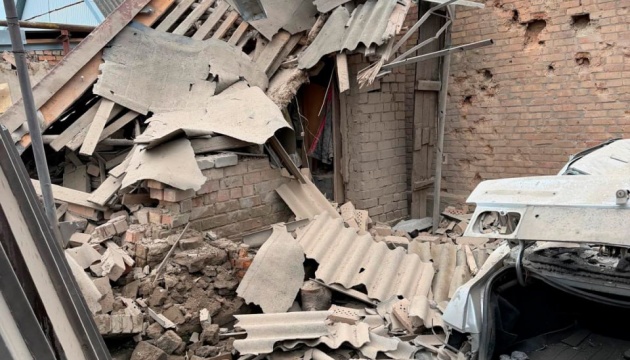
Massive shelling in Dnipropetrovsk region: casualties reported
Russian forces launched 40 strikes on the Dnipropetrovsk region, resulting in two deaths and three injuries.
 🏙️City
How to choose fresh fish: expert tips for shoppers in Voznesensk
Experts shared key criteria for checking the freshness of fish to help local residents avoid purchasing poor-quality products.
 💡Tech
BepiColombo mission reaches Mercury: technical glitch reported during orbit insertion
The BepiColombo spacecraft has successfully reached Mercury after an eight-year journey, though experts identified a propulsion issue during the maneuver.
 🏙️City
Friedrich Merz calls NATO's 2008 refusal to accept Ukraine a mistake
German chancellor candidate Friedrich Merz stated that the Alliance's indecision regarding Ukraine's membership was a fatal error.
 🛡️Security
Albania Officially Denies Involvement in Drone Attack on Russian Corvette in Libya
The Ministry of Foreign Affairs of Albania has categorically rejected accusations that its territory was used to launch drones against a Russian naval vessel.